Day 2 — The Day It Got a Name
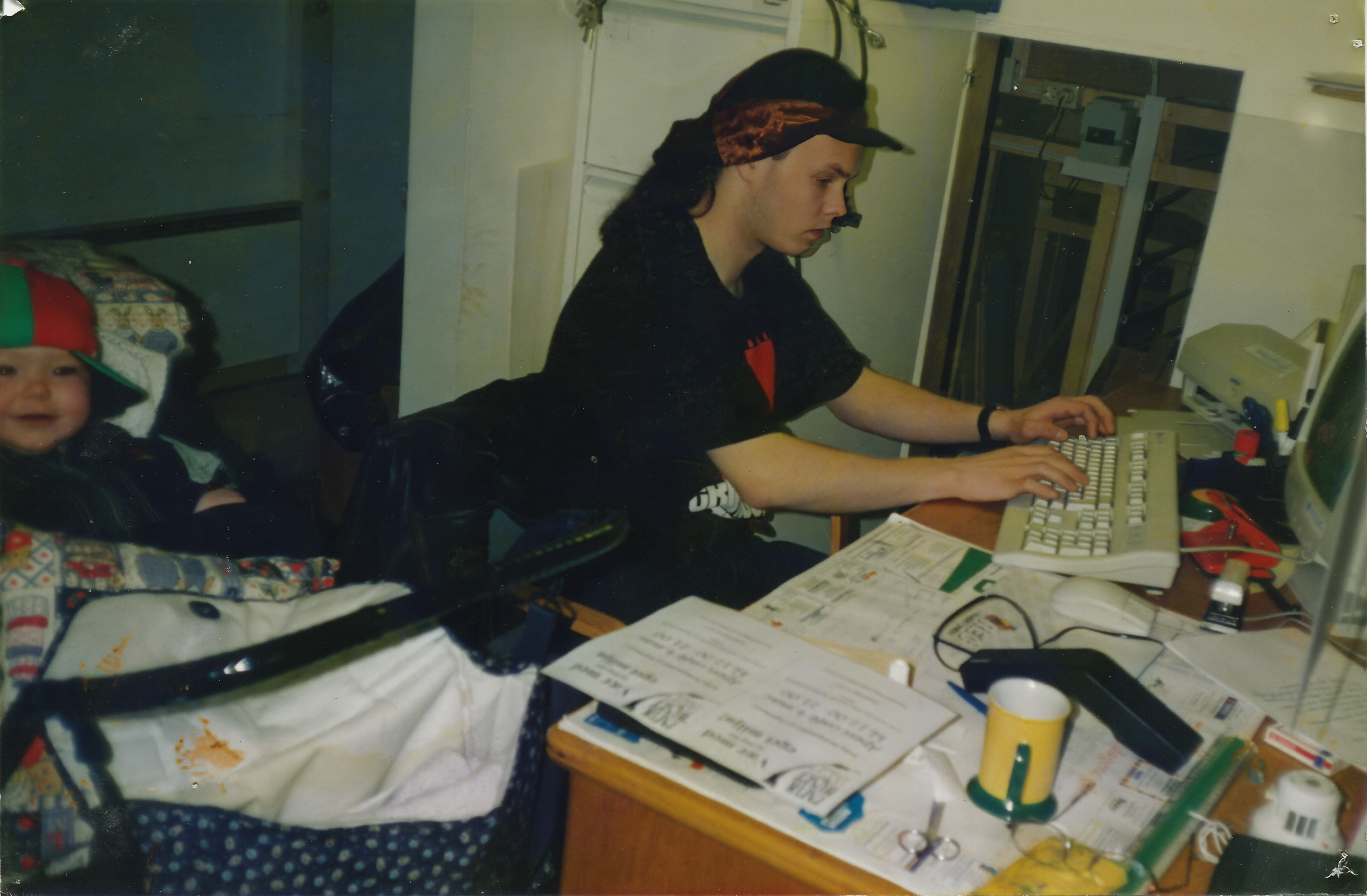
My son Mathias visiting me at work in 1996, back when I ran a local theatre stage in my home town called Papirhuset Teater — the Paper House Theatre. Working with talented, creative people has always been a huge inspiration to me. It was during my time there that I realised Henrik Ibsen fucking rocks.
Day one had given the thing four decisions and a plan. Day two gave it the two things it was still missing, and they turned out to matter more than I expected: a name, and a price.
The name came first, and it came because I could no longer stand the working title.
Up to that point the whole endeavour had been filed under something flatly descriptive — a phrase that told you what it did and absolutely nothing about what it was. That is fine for a folder. It is no good at all for a thing you intend people to care about.
So it became Fret-o-Matic. The "-o-Matic" is deliberate: it has the cheerful, slightly absurd confidence of an old machine that promises to do one job and do it without fuss, and that is exactly the register I wanted.
A guitarist should read the name and grin a little before they've even seen what it does.
A product needs a name before anyone is allowed to fall in love with it, and on day two, mine finally got one.
The less glamorous work
With the name settled I spent the bulk of the day on the less glamorous work that actually moves a project: I wrote two more specifications.
One for the bridge — the small, careful piece of code that will eventually live inside DaVinci Resolve itself, build the control panel, and drop the finished tab onto the timeline.
One for the audio-analysis stage of the engine, the part that has to listen to a recording and work out its tempo, its key, where the beats fall, and what notes are actually being played.
I also went back through the documentation standards that govern the entire project and tightened them — formalising the role of the independent reviewer who checks every spec before any code is written, and pinning down the small disciplines, the export folders and the timestamps, that sound trivial right up until the day they save you.
A proposal with numbers in it
Then came the price.
I took the previous day's proposal and turned it into something with numbers in it: a proper cost estimate and development roadmap, laying out honestly what building this at pace would actually require, and what the money would buy.
I gave it the same treatment as everything else that leaves my desk — a black cover, gold accents, made to look like it meant business — and sent it off to the people who had been quietly following the idea from the start.
I will say only this about what happened next, because money is not what this story is about and it will get very little airtime here: the proposal did its job.
The plan was sound, the people who read it agreed that it was sound, and the project stopped being a thing I was hoping to build and became a thing I was now committed to building. That is all a good proposal is ever supposed to do.
The same day, Cory confirmed he was in as the ears of the operation — the player who would tell us, fret by fret, whether the engine was actually right.
There is one small thing I did that day that I am oddly fond of.
At the very foot of that funding document, almost out of habit, I had typed my usual motto — the line about there being no fate but what you make for yourself. And then, in a rare and probably uncharacteristic fit of professionalism, I reached back in and deleted it.
Some things you keep on the wall above your own desk rather than in a document you're sending to other people. The motto stayed. It just stayed private.
A name, and a plan that someone believed in. Day two was the day the idea quietly stood up and became a project.
Written by Torgrim Nyerrød — May 2, 2026
Discussion (0)
Loading comments…